

Utility Fencing for Energy Infrastructure and Power Facilities
Energy infrastructure is critical infrastructure. Power substations, electrical co-ops, solar generation facilities, and other energy installations operate under security requirements that reflect what happens when that infrastructure is compromised — not just to the facility, but to everyone it serves. The fence around a power substation isn’t a property boundary. It’s a barrier between the public and equipment that can kill instantly on contact and disable power to thousands of customers if damaged or accessed without authorization.
Triangle Fence has installed perimeter fencing for energy and utility facilities across the Southeast — power substations, electrical co-operative facilities, and energy infrastructure installations where the specification is driven by safety and security requirements rather than standard commercial fence criteria. We’re also actively pursuing solar farm fencing work as the utility-scale solar market continues its rapid expansion across the region. If you’re a GC or EPC contractor managing a solar farm construction project, or a utility operator with a substation or facility fencing requirement, we’d like to be on your bid list.
Why Energy and Utility Projects Choose Triangle Fence
Energy facility fencing projects don’t move through the same procurement channels as standard commercial fence work, and they don’t have the same tolerance for contractor mistakes. A power substation fence that fails inspection delays energization of the substation. A solar farm perimeter fence that isn’t completed on schedule delays the project’s interconnection date and the start of power generation revenue. Energy and utility clients — whether they’re large investor-owned utilities, rural electric co-operatives, or independent power producers — need a fence contractor who understands the project schedule and the consequences of missing it.
We’ve worked for major utility operators in the Southeast — including co-operative utilities that service rural counties across our region — as well as for the general contractors and engineering firms that manage energy facility construction projects. The fence specification on a power substation or energy facility is typically driven by safety requirements — the fence has to be sufficient to prevent unauthorized access to energized equipment, maintain required clearances, and survive the physical environment of an operating energy facility. We read the specification, install to it, and don’t create problems on the schedule.
Our family-owned structure and 44-year track record mean the person responsible for bidding your project is the same person accountable for delivering it. We have the crew depth and capital access to purchase materials ahead of the draw and show up on schedule. And we’re available by cell when a project manager has a question on a Saturday afternoon — which is often the case on energy projects running tight to an interconnection deadline.
Energy and Utility Facility Projects — What We've Built
- Power substation fencing: Perimeter fencing for electrical power substations operated by major regional utilities and rural electrical co-operatives across the Southeast. Substation fencing is a safety-critical installation — the fence has to comply with NERC reliability standards and the utility’s own security specifications while maintaining the required clearances from energized equipment.
- Electrical co-op facility fencing: Perimeter and security fencing for rural electrical co-operative service yards, operations centers, and infrastructure facilities. We’ve worked for multiple co-operative utilities in our region — the kind of long-standing relationships built over years of doing the work correctly.
- County and municipal energy facility fencing: Perimeter fencing for county-operated energy facilities, including a county environmental and energy services facility in our home region. County energy facilities often move through the same public bid process as other municipal projects — we know that process and participate in it.
- Solar farm perimeter fencing: Perimeter fencing for utility-scale solar generation facilities. Solar farm fencing is a growth area for Triangle Fence — the Southeast is in the middle of a solar buildout that shows no signs of slowing, and large utility-scale solar installations are a natural fit for a fence contractor with our scale capacity, chain link expertise, and experience on large linear-footage projects. We’ve done solar farm fencing and we’re actively seeking to grow in this vertical.
- Energy infrastructure expansion and security upgrades: Perimeter fence extension and security upgrade projects on existing energy facilities — adding to or replacing aging fence systems on operating substations and utility facilities where the work has to be coordinated with live equipment and active utility operations.

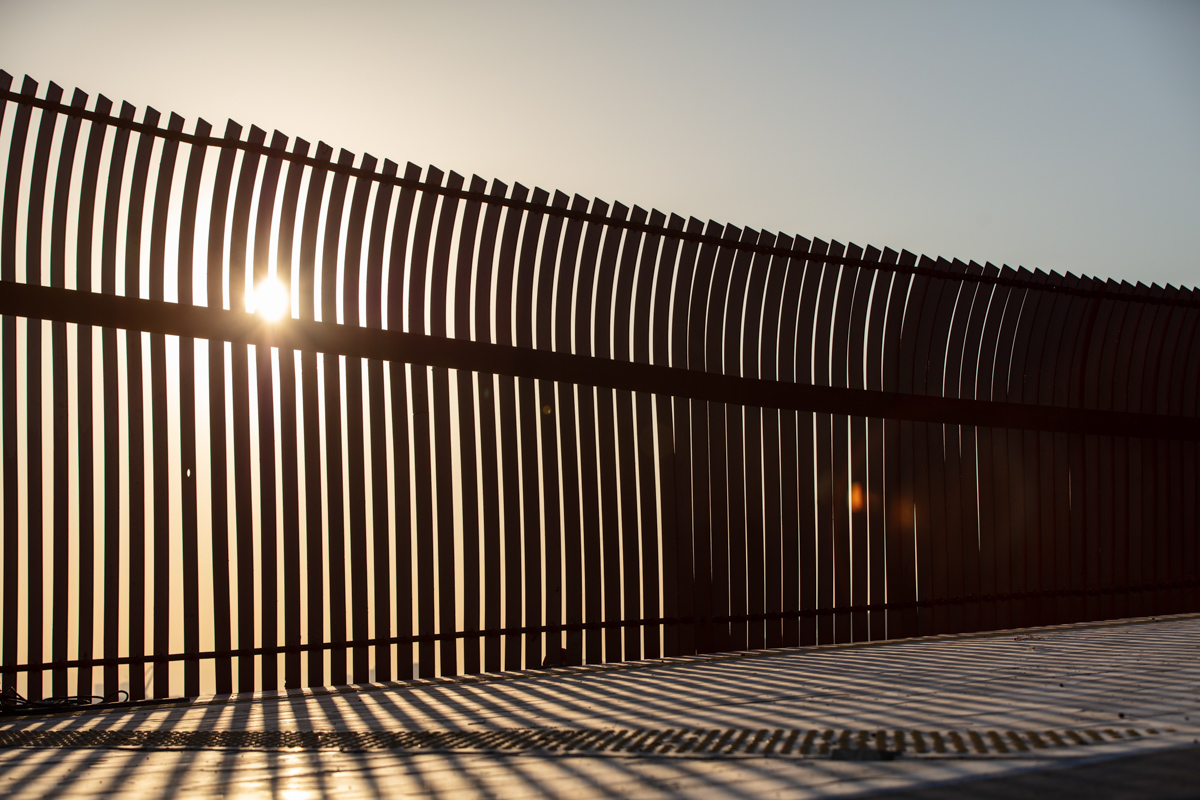

Solar Farm Fencing Contractor: A Growth Vertical We're Actively Pursuing
Utility-scale solar development is one of the fastest-growing construction segments in the Southeast, and solar farm perimeter fencing is a project type that plays directly to Triangle Fence’s core capabilities — large linear footage, heavy-gauge chain link, straightforward perimeter specification, and the capital access and crew depth to execute at the scale a utility-scale solar facility requires.
A utility-scale solar farm can cover hundreds or even thousands of acres. The perimeter fence runs the full boundary of the generation facility — miles of chain link in some cases, installed to an agricultural or utility fence specification that prioritizes coverage and durability over complexity. The linear footage demands are significant, material procurement is a substantial undertaking, and the installation schedule is driven by the project’s interconnection date — a fixed deadline that the solar developer, the EPC contractor, and the utility all have a direct financial stake in meeting.
These are exactly the project characteristics that Triangle Fence is built to handle. We’ve managed large-scale material procurement ahead of the draw schedule on projects worth multiple times what a solar farm fence typically costs. We’ve coordinated large-crew installations on phased project sites. We’ve hit GC deadlines on projects where missing the schedule had real financial consequences. We have not yet executed solar farm fencing at the scale of the largest utility-scale projects in the market, and we’re honest about that — but our operational capability is there, and we’re looking for the right GC or EPC relationship to demonstrate it on a solar project at meaningful scale.
If you’re a GC or EPC contractor building utility-scale solar and looking for a fence subcontractor who can handle the linear footage, the schedule, and the procurement demands of a large solar farm fencing scope, we’d like to have that conversation.
Energy and Utility Facility Fencing Applications
Power Substation Fencing
Power substation perimeter fencing is a safety-critical application governed by NERC physical security standards and the individual utility’s security program. The fence specification for a power substation is designed to prevent unauthorized access to energized equipment and maintain the required clearances between the fence and the equipment it encloses. Standard substation fence specifications call for heavy commercial or industrial chain link at a minimum height of 7 to 8 feet with three-strand barbed wire on outriggers at the top. Anti-climb provisions — small mesh or anti-climb hardware — are part of some substation specifications. Gate systems at substations are security-critical and typically include high-quality padlock hardware or electronic access control depending on the utility’s security classification for the facility. We install to the utility’s specification and understand the safety and security requirements that drive it.
Electrical Co-Operative and Utility Facility Fencing
Rural electrical co-operatives operate service yards, equipment storage facilities, and operations centers that require commercial to industrial grade perimeter fencing — secure enough to protect utility equipment and materials stored at the facility, practical enough to allow daily operational access for utility vehicles and personnel. We’ve fenced co-operative utility facilities across our region over multiple years of repeat work. The procurement process at rural co-ops often moves through the co-op’s board-approved purchasing process rather than a standard commercial bid — we understand how to work within that framework.
Solar Farm Perimeter Fencing
Utility-scale solar farm perimeter fencing is typically specified as agricultural or light commercial chain link — sufficient to define the facility boundary, deter casual access, and meet the project’s land use permit requirements, without the security specifications of a power substation or detention facility. The challenge in solar farm fencing is scale: a large utility-scale solar installation can require miles of perimeter fence, procured and installed on a schedule driven by a fixed interconnection date. Material sourcing, crew deployment, and logistics management at that scale require the same operational capacity we bring to large distribution facility and institutional projects. Solar farm fencing is a growth area for Triangle Fence, and we’re positioning this page specifically as an entry point for GCs and EPC contractors with solar farm fence scopes to find us.
Energy Facility Access Control and Gate Systems
Energy facility gate systems — at substations, solar farms, and utility operations centers — are part of our energy fencing scope. Substation gates are typically manually operated with high-security padlock hardware, though some utility security programs require electronic access control and audit logging at facility entry points. Solar farm gate systems are typically simpler — a single or double swing gate at the facility access road with a standard commercial lock or padlock — but have to be positioned and sized correctly for the utility vehicles that will use them throughout the operating life of the facility. We install energy facility gate systems as part of the full perimeter scope.
What Energy Facility Fencing Actually Requires
Energy facility fencing is governed by a different set of requirements than standard commercial fence work, and understanding those requirements is part of what makes a fence contractor qualified for this project type.
NERC Physical Security Standards for Substations
Electric utilities operating bulk power system facilities are subject to NERC (North American Electric Reliability Corporation) physical security standards, specifically CIP-006, which establishes requirements for physical security of critical cyber assets and their associated physical locations. The physical security perimeter under CIP-006 must be defined and documented, and the fence is typically the primary physical barrier. The utility’s security plan defines the fence specification for their CIP-006 compliant facilities, and installation documentation is part of demonstrating compliance. We install to the utility’s specification and can provide the installation documentation their compliance program requires.
Safety Clearances from Energized Equipment
Power substations contain energized equipment operating at voltages that are immediately lethal at contact distances far greater than the fence itself. The fence specification for a substation has to maintain required clearances between the fence structure — posts, top rail, barbed wire, and any metallic components — and the energized equipment inside. Violation of those clearances is a safety hazard during installation and an inspection failure at completion. We’re aware of this requirement and coordinate with the utility’s engineering staff when the specification is not explicit about clearance requirements at specific fence locations.
Scale and Linear Footage for Solar Projects
The primary operational challenge in solar farm fencing is scale. A utility-scale solar farm — 50, 100, 200 megawatts or more — occupies a large land area and its perimeter fence can run for miles. Material procurement at that scale is a significant undertaking, and the delivery schedule has to be coordinated with the installation crew deployment across a large, often remote site. We have the procurement relationships and capital access to manage large material purchases and the crew flexibility to deploy at the scale a large solar farm fencing project requires.
Who We Work With on Energy Facility Fencing Projects
Energy facility fencing projects reach us through several channels. Power substation and utility facility fencing often comes through the utility’s own procurement process — we’ve worked directly for utility operators who manage their construction and maintenance fence work through their own vendor qualification and procurement programs. In other cases, substation and energy facility fencing is part of a larger construction project managed by a GC or EPC contractor who carries the fence scope as a subcontract.
Solar farm fencing projects almost always move through an EPC (engineering, procurement, construction) contractor who manages the full solar facility construction scope. The fence is a subcontract within the EPC’s work — typically bid through the EPC’s subcontractor list and executed on the EPC’s construction schedule. If you’re an EPC contractor building utility-scale solar in the Southeast and looking for a fence subcontractor, we’d like to be on your list.
We also work with county governments and rural co-operatives on energy facility fencing that moves through public bid processes. If you’re a co-op or county energy facility manager with a fence project coming to bid, we’d like to know about it.
Our Energy Facility Fencing Process
- Specification and Regulatory Review: We review the full fence specification alongside any applicable regulatory requirements — NERC CIP-006 for substation projects, land use permit conditions for solar farm projects, and any utility-specific security program requirements. If the specification has gaps relative to the regulatory requirements, we identify them before the bid goes in.
- Safety Coordination for Active Energy Facilities: For fencing on or adjacent to operating energy facilities — active substations, operating utility yards — we coordinate with the utility’s safety staff before any installation activity begins. Working in proximity to energized electrical equipment requires awareness of clearance requirements and compliance with the utility’s construction safety program.
- Large-Scale Material Procurement: For large energy facility perimeter projects — particularly solar farms with significant linear footage requirements — we lock in materials early and coordinate delivery scheduling across the full installation scope. We have the capital to purchase materials ahead of the draw schedule and the supplier relationships to manage large-volume orders on the timeline the project requires.
- Phased Installation to Project Schedule: Energy facility fencing installation is often phased — either because the facility is being built in phases (common on large solar farms and substation expansions) or because portions of the site are accessible before others. We plan the full phased installation from the start and execute each phase on the project schedule.
- Documentation and Compliance Closeout: For energy projects with regulatory compliance documentation requirements — substation fence installation records for NERC CIP compliance, land use permit completion documentation for solar farm projects — we provide the installation documentation the project requires. We back all energy facility fencing with a one-year workmanship warranty.
Frequently Asked Questions About Energy and Utility Fencing
The standard specification for power substation perimeter fencing is heavy commercial to industrial chain link at a minimum height of 7 to 8 feet, with three-strand barbed wire on outriggers mounted above the top rail. Post spacing, wire gauge, and mesh size are typically defined by the utility’s security specification. Anti-climb provisions — small mesh or anti-climb hardware at the base of the fence — are part of some substation specifications. Gate systems are typically manually operated with high-security padlock hardware, though some utility security programs require electronic access control.
Yes, with appropriate safety coordination. Fencing on or adjacent to operating substations requires awareness of electrical clearance requirements and compliance with the utility’s construction safety program. We coordinate with the utility’s safety staff before work begins, review the clearance requirements for the specific substation, and execute the installation within those constraints. Where phasing the installation is required to maintain clearances from operating equipment, we plan the phased sequence before the work starts.
Yes. Solar farm fencing is a growth vertical for Triangle Fence. The Southeast is in the middle of a utility-scale solar buildout, and large solar farm perimeter fencing is a project type that matches our core capabilities — large linear footage, heavy-gauge chain link, and the scale to handle significant material procurement and crew deployment. We’re actively seeking relationships with EPC contractors building utility-scale solar in our region and beyond.
We don’t have a firm upper limit we’ve defined, and we’re honest about the fact that we haven’t yet executed solar farm fencing at the scale of the largest utility-scale projects in the market. What we can tell you is that our operational capability — crew depth, capital for material procurement, supplier relationships, and project management for large phased scopes — is built for large linear-footage projects. We’ve managed fence scopes on projects where the fence purchase alone ran to hundreds of thousands of dollars. The right conversation is about your specific project, your schedule, and what you need from a fence subcontractor.
We’ve worked for rural electrical co-operatives in our region over multiple years — the kind of repeat relationship that develops when a contractor shows up, does the work correctly, and answers the phone when called. Co-op procurement processes vary — some move through a board-approved vendor list and direct procurement, others issue formal bids for larger projects. We work within whichever procurement framework the co-op uses and provide whatever documentation their process requires.
Request a Bid for Your Energy or Utility Fencing Project
Triangle Fence installs perimeter fencing for power substations, electrical co-operatives, and energy infrastructure facilities across the Southeast — and we’re actively building our solar farm fencing portfolio with EPC contractors managing utility-scale solar construction projects.
If you’re a utility operator with a substation or facility fencing requirement, a GC or EPC contractor with an energy project fence scope, or a co-op or county energy facility manager with an upcoming project, we want to hear from you. We work on invitation-to-bid packages, direct procurement, and public bids for energy facility fencing. No residential work. Utility-grade installation, executed on your schedule.